
The thesis
What a business gets
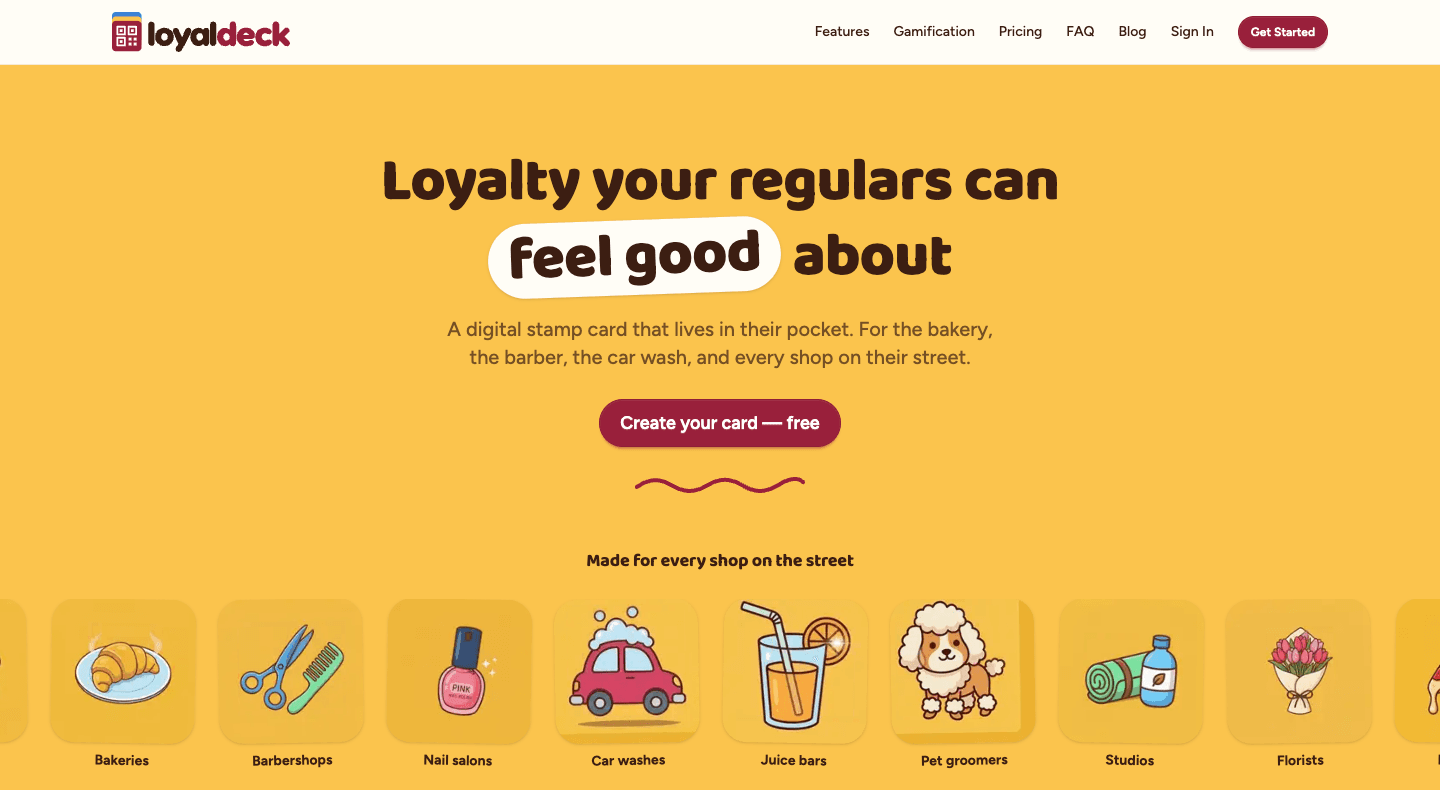
- Digital stamp cards customers add to Apple Wallet or Google Wallet by scanning a QR code. No app download — the single biggest reason small businesses abandon loyalty tools.
- Points and levels that work across visits.
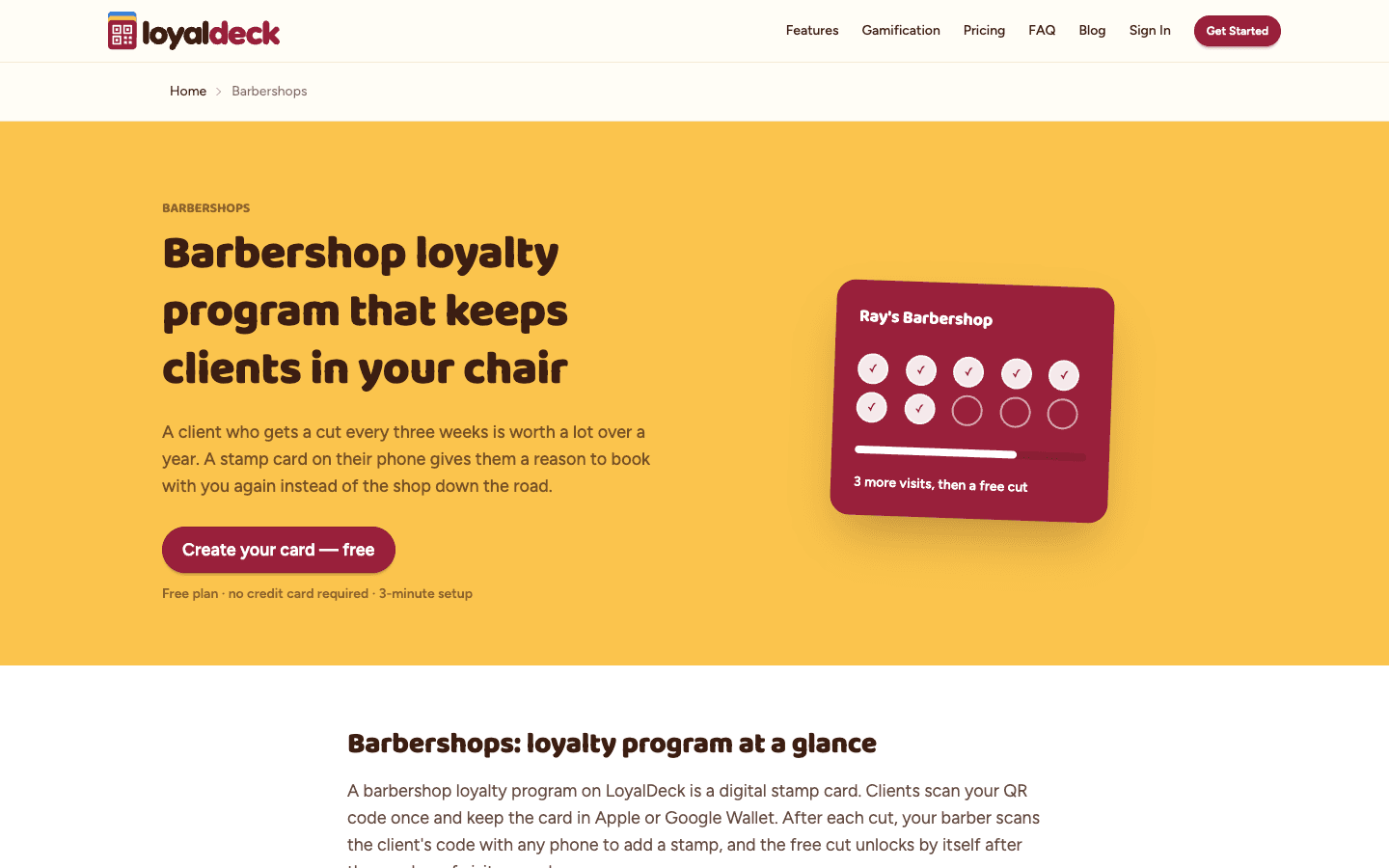
- Industry presets so a new business doesn't start from a blank form. A bakery gets a 9-stamp card with a sensible reward; a nail salon gets a 5-visit card, because nobody has nine manicures before expecting something back.
- Broadcasts to recent customers, promo codes, scratch cards, referrals, staff tipping, subscription deals — the whole BaristaCard feature set.
- A free plan for a single location, with paid tiers for multi-location and the advanced mechanics.
The hard part was the words
- Translation and de-branding don't compose. The neutraliser ran after gettext, so German and French strings came out half-rewritten — "Mein Business" — because the rewrite only knew English vocabulary. LoyalDeck now ships English-only until the translations are redone properly, which is the honest answer rather than mixed-language copy.
- Feature gating has to be complete, not mostly complete. BaristaCard has a café TV mode — a leaderboard screen for the shop's wall. Every route was gated behind a feature flag for LoyalDeck. Every route except one nav link, which bounced LoyalDeck owners to the homepage with a "Not found" flash. The platform audit skills I'd normally use for a client project turned out to matter just as much for my own.